

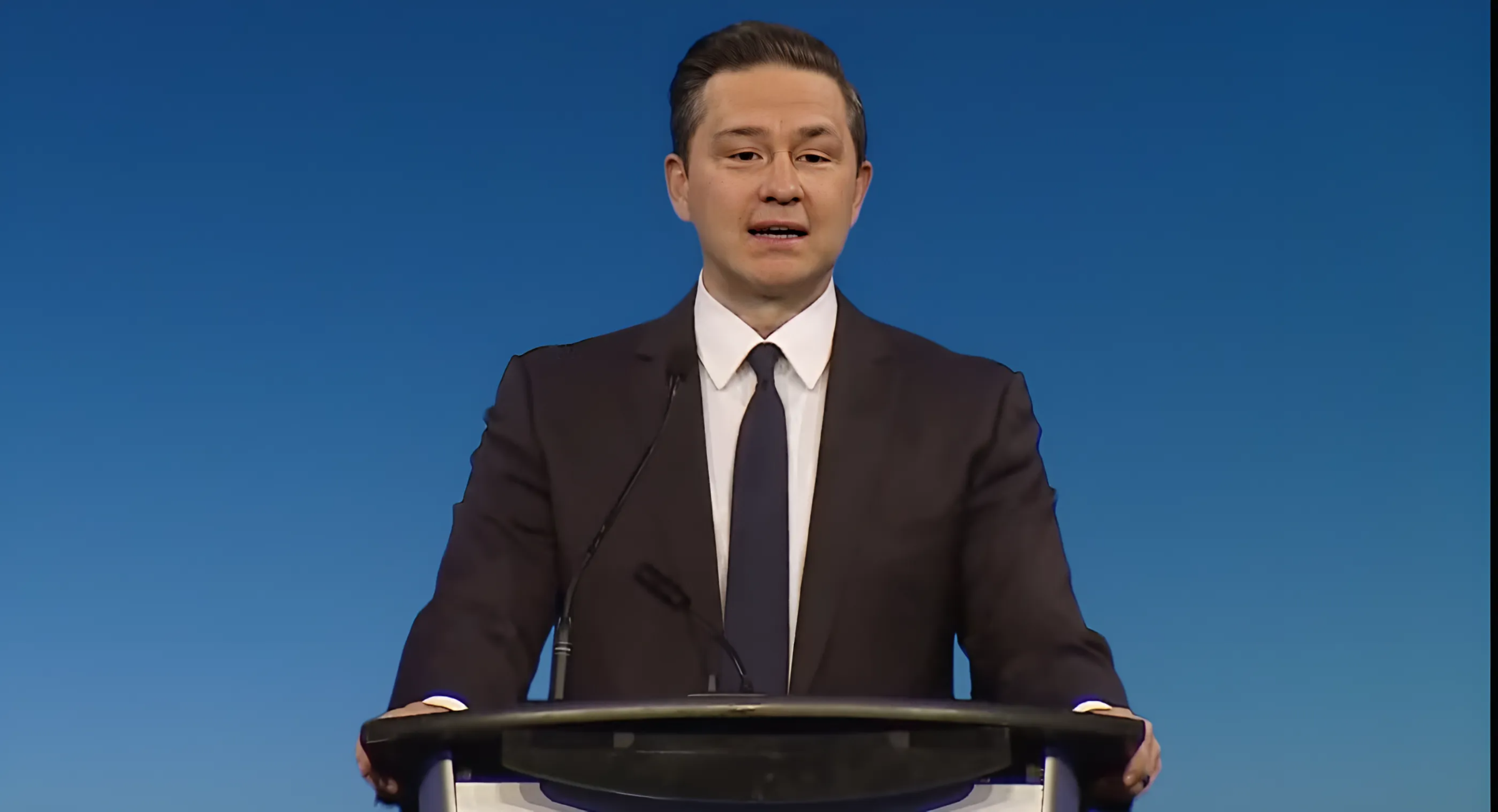
As the Battle River–Crowfoot by-election enters its final stretch ahead of the August 18 vote, a quiet but powerful divide has emerged, not between candidates, but between the lived political reality in the riding and the story being told.
Pierre Poilievre, contesting the seat vacated by Damien Kurek, remains the frontrunner. The energy is unmistakable. Yet, scroll through national headlines, and the tone shifts into something else entirely.
The current language of national political journalism does not reflect the momentum being witnessed here. While local activity intensifies by the day, coverage continues to reduce the by-election to a procedural matter or, at best, a second-chance trial for a leader they’ve already written off. The name Poilievre is often avoided in headlines. When mentioned, it’s as a man attempting to stay relevant in a rural district, rather than as the leader of the official Opposition whose national polling numbers had reached 42–43 per cent before the last election, a level not seen in years by any Conservative leader.
That rise was not an illusion. It was the result of months of cross-country town halls, clear messaging, and grassroots organizing. The Conservative Party, under Poilievre, had consolidated support and was poised to form government. But the spring election turned sharply after a realignment of strategies: coordinated criticism, an unprecedented ballot stunt in Carleton, and the sudden elevation of Mark Carney into the Liberal spotlight. The Conservatives lost narrowly.
Understanding the Incentives
The shift in tone isn’t accidental. It reflects deeper structural incentives. What gets highlighted, what gets downplayed, and what gets excluded altogether often follows a clear pattern. Criticism of Poilievre is consistently framed in terms of style. His communication is labelled “combative,” “divisive,” or “populist.” However, the policy debates behind that tone, whether around affordability, regulation, crime, or border control, are rarely unpacked.
A second electoral setback would affirm the same narratives and provide closure to months of editorial speculation. A win, however, would unravel that script and raise uncomfortable questions about the fairness and integrity of how the last campaign unfolded.
What Isn’t Being Said
Once again, the ballot has become a weapon. In Battle River–Crowfoot, voters will face a list of 214 candidates, a number so excessive that the ballot itself stretches for metres. Officially, it’s framed as democracy in action. In reality, it’s a rerun of what happened in Carleton just months ago, when 89 names were used to flood the ballot, bury Pierre Poilievre’s position, and fracture the vote.
It’s a legal manoeuvre, but one that raises serious ethical and institutional questions.
This isn’t just a rural campaign. It is an act of political correction. And while it is playing out in full view, much of the coverage treats it as a side note. There is little interest in asking why the leader of the Opposition is returning through a by-election. Even less in examining what the campaign’s intensity might mean beyond the riding’s boundaries.
Avoiding the Polarization Frame
National commentary has also leaned heavily into surface-level comparisons: Carney’s calm vs. Poilievre’s fire, institutional poise vs. grassroots challenge. But there is little attempt to explore the broader meaning of those contrasts, or how each figure reflects a different model of leadership.
Avoiding deeper analysis helps maintain a narrow narrative and avoids engaging with uncomfortable divides, especially the widening political and cultural gap between urban cores and rural regions. The net result is a kind of silence. Not an absence of coverage, but a refusal to engage with the real questions this by-election raises.
From Here, the Divide Is Obvious
Being on the ground tells a different story. The campaign isn’t struggling, it’s accelerating. The momentum isn’t fading, it’s sharpening. The tone isn’t angry, it’s determined.
Whatever the final numbers show, the larger point has already been made. The gap between what’s happening here and what’s being said about it will remain a defining issue, not just for this riding, but for Canadian democracy.