

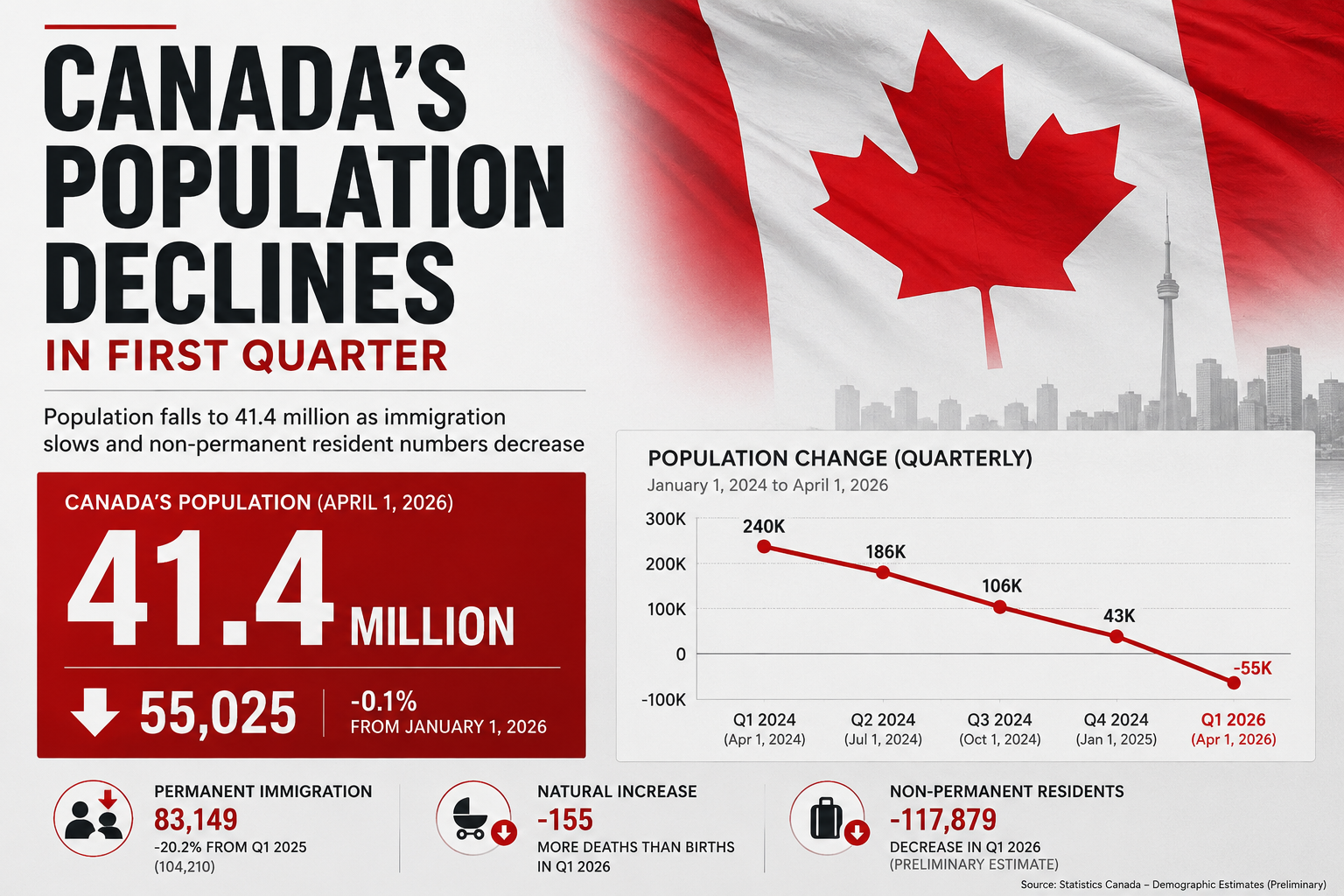
Canada’s population declined by an estimated 55,025 people in the first quarter of 2026, the first quarterly decrease in more than a year, as lower immigration levels and a drop in the number of non-permanent residents outweighed population gains from other sources.
The population was estimated at 41,417,056 on April 1, down 0.1 percent from Jan. 1, according to preliminary demographic estimates released Friday.
The decline coincided with a slowdown in permanent immigration. Canada admitted 83,149 permanent residents during the first three months of 2026, down 20.2 percent from 104,210 in the same period a year earlier. The reduction aligns with lower immigration targets set by the federal government for 2026.
The country also recorded a slightly negative natural increase during the quarter. There were 155 more deaths than births between January and March, compared with a natural increase of 983 people in the first quarter of 2025.
Negative natural increase is not unusual during winter months, when births tend to be lower and deaths higher. Similar declines were recorded in the first quarters of 2022 and 2023.
The largest contributor to the population decrease was a decline in the number of non-permanent residents, including people holding work permits, study permits and other temporary authorizations to remain in Canada.
Preliminary estimates show the non-permanent resident population fell by 117,879 people during the quarter.
Recent changes in immigration processing could lead to larger revisions than usual. Immigration, Refugees and Citizenship Canada has increased the number of permit extensions it grants, while processing times have also lengthened.
Canada’s population growth over the past several years has been driven primarily by international migration. The latest figures suggest that trend moderated during the opening months of 2026 as immigration levels eased and the temporary resident population declined.