

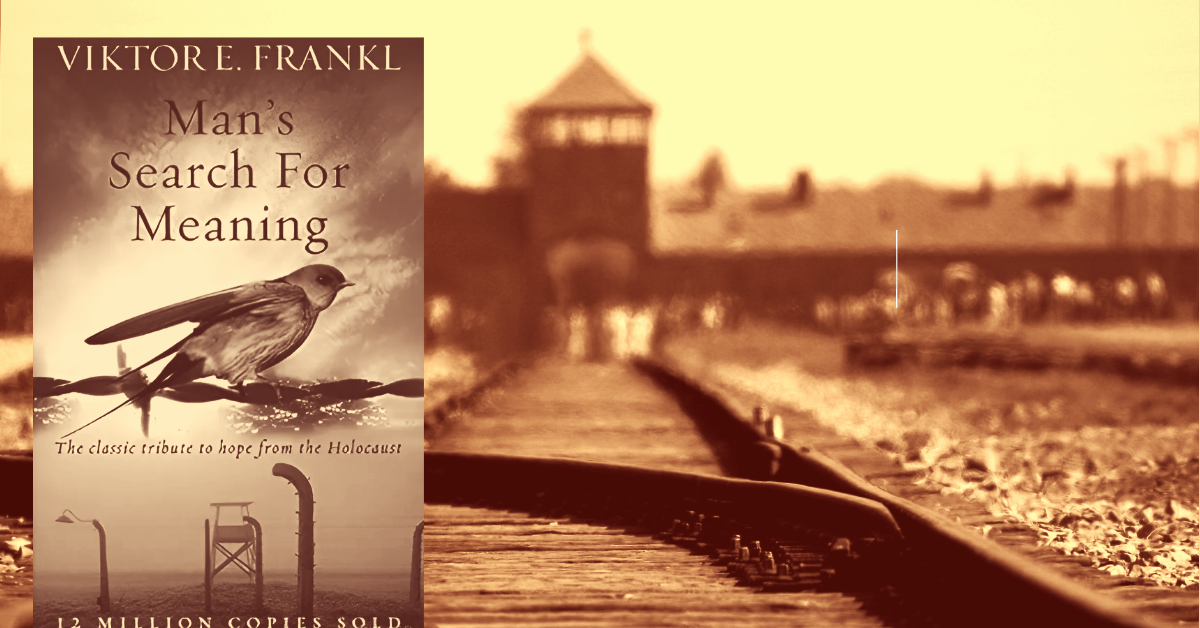
“Mаn’s Seаrсh fоr Meаning” by Viktоr E. Frаnkl is widely regarded as one of the most influential works of the 20th century. Written by a psychiatrist who survived the Nazi concentration camps during World War II, the book combines personal experience with psychological insight. Over the years, it has crossed cultural and linguistic boundaries and has been translated into many languages, continuing to reach new generations of readers.
The book falls within autobiographical literature, yet it goes far beyond a personal memoir. It is divided into two main parts. The first part recounts Frankl’s experiences in the concentration camps, where he observed human behavior under extreme suffering, deprivation, and fear. Rather than focusing solely on physical hardship, Frankl examines the psychological responses of prisoners, how hope disappeared for some, and how others managed to survive despite unbearable conditions. His observations are grounded in lived experience, not abstract theory.
In today’s materialistic world, many people focus heavily on possessions, status, and external success. As a result, deeper questions about meaning and purpose are often pushed aside. Frankl’s work challenges this mindset. He suggests that when people lose sight of meaning, they become more vulnerable to feelings of emptiness, depression, and anxiety. His narrative encourages readers to pause and reflect on what truly sustains them when external comforts disappear.
The second part of the book introduces logotherapy, the psychotherapeutic approach Frankl developed based on his experiences. Logotherapy is built on the idea that the primary human drive is not pleasure or power, but meaning. According to Frankl, every person has an inner need to find meaning in life, and this need can provide strength even in the most painful circumstances. Meaning, in his view, is not something that can be given by others. It must be discovered individually, often through responsibility, relationships, or personal values.
Throughout the book, Frankl emphasizes that suffering itself is not noble or desirable. However, when suffering is unavoidable, the way a person responds to it becomes crucial. He argues that people retain the freedom to choose their attitude, even when everything else is taken away. This perspective forms the foundation of his psychological approach and gives the book its lasting emotional impact.
Life naturally moves through periods of hardship and ease. At times, individuals may feel overwhelmed and stuck, while at other moments they may feel hopeful and free. Frankl suggests that stability does not come from avoiding these emotional extremes, but from grounding oneself in meaning. When people understand why they are living, they often develop the resilience needed to face uncertainty and loss.
One of Frankl’s most well-known statements captures this idea clearly. When people are no longer able to change a situation, they are challenged to change themselves. This is not a call to ignore injustice or suffering, but a reminder that inner freedom can survive even when external freedom is stripped away.
Frankl does not attempt to rank suffering or suggest that one person’s pain is more important than another’s. At the same time, he does not shy away from acknowledging the scale of historical trauma. He personally endured the loss of his parents, siblings, and wife in the concentration camps. Alongside the countless families torn apart by violence and displacement, his experiences raise a difficult question. How does a person preserve mental and emotional stability after witnessing such devastation?
Logotherapy is Frankl’s response to this question. He proposes that through self-reflection and the search for meaning, individuals can find the motivation needed to continue living, even after profound loss. His insights do not deny suffering. Instead, they show how suffering can be transformed into a source of inner strength when life is approached with purpose and responsibility.
Frankl repeatedly reminds readers that hope does not disappear simply because circumstances are harsh. Hope can exist quietly, sustained by meaning rather than optimism. With this mindset, people may not be able to control events, but they can control how those events shape their inner world.
In summary, Man’s Search for Meaning offers a powerful exploration of human resilience. It shows how meaning can exist even in the harshest conditions and how personal responsibility plays a central role in psychological survival. Frankl’s life journey and his development of logotherapy continue to inspire readers who seek depth rather than comfort.
The themes in the book remain relevant across time and cultures. The search for meaning is a shared human experience, regardless of background or historical context. While each person’s struggles are unique, Frankl demonstrates that hardship can become a catalyst for growth when approached with awareness and purpose.
This book stands as a testament to the strength of the human spirit. It does not promise happiness, nor does it offer simple solutions. Instead, it invites readers to reflect honestly on their own lives and the values that guide them. In doing so, it encourages a deeper understanding of what it means to live with dignity, hope, and purpose.
I believe it is important to share it with readers because its message remains timeless. It serves as a reminder that even in moments of profound suffering, people retain the ability to find meaning and shape their inner response to life.

Esra Sahin