

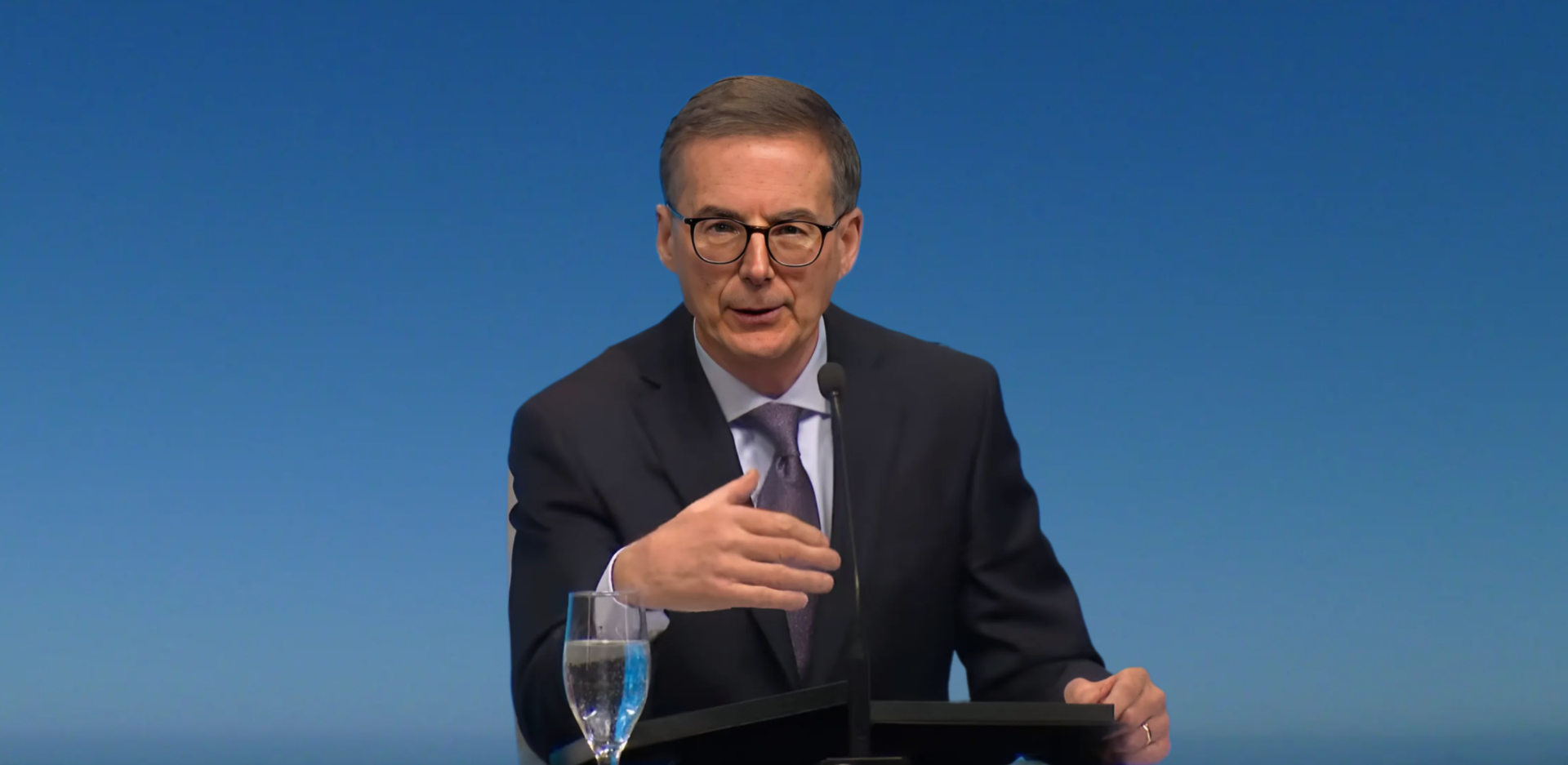
The Bank of Canada held its key interest rate at 2.25 percent on Wednesday, keeping borrowing costs unchanged for a sixth straight month.
Governor Tiff Macklem said the decision reflects growing uncertainty, from the war in Iran, which has pushed global energy prices higher and added pressure to inflation in the near term.
Inflation has been close to the Bank’s 2 percent target for more than a year, with the annual rate easing to 1.8 percent in February. However, the jump in gasoline prices is expected to drive inflation higher in the coming months.
At the same time, the Canadian economy is showing signs of weakness. Gross domestic product contracted by 0.6 percent in the fourth quarter, due to a drop in inventories, while early data for 2026 suggests only modest growth. The labour market has softened, with the unemployment rate rising to 6.7 percent in February and recent job gains reversing.
Macklem said the Bank faces a difficult balance. Higher interest rates could help contain inflation if energy prices remain elevated, but would risk further slowing an already weak economy. Lower rates could support growth, but might allow inflation to rise above target.
“We’re dealing with a lot of uncertainty,” he said, adding the Bank will respond as needed as conditions evolve.
Officials said risks to economic growth are tilted to the downside, while risks to inflation are tilted to the upside. Much depends on how long the conflict in the Middle East lasts and whether it spreads, affecting global supply chains and commodity markets.
Canada, as a net exporter of oil and natural gas, could see some benefit from higher energy prices through increased export income.
Food prices remain another concern. While food inflation has slowed, it continues to rise faster than overall inflation, adding to affordability pressures.
For now, the central bank is holding its position, signalling it is not ready to move rates in either direction. Macklem said the Bank will monitor whether higher energy prices begin to spread more broadly through the economy.
“If those effects become persistent, we will act,” he said.
The Bank’s next rate decision is scheduled for April.