

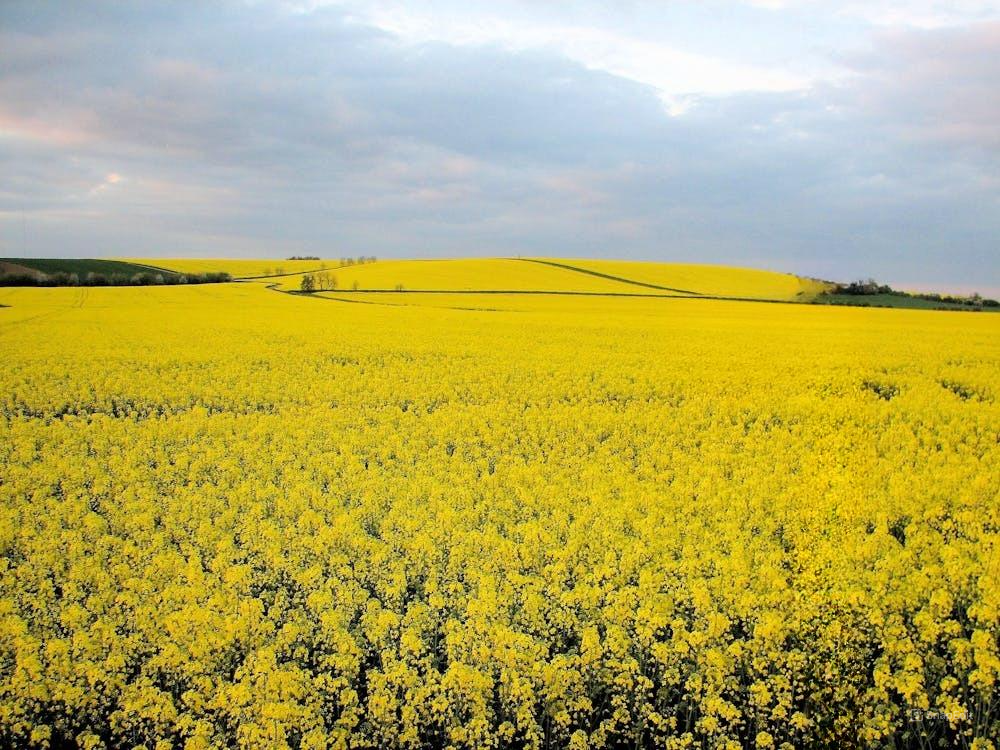
The 2025 crop year ended with a split story: record strength across the Prairies and disappointing results in Central Canada. New figures show that farmers in Western Canada reaped some of their largest wheat and canola crops on record, helped by late-season rainfall that salvaged fields after a dry start. But growers in Ontario and Quebec, hit by heat and low rainfall, saw corn and soybean yields drop sharply.
The contrasting results matter for farmers and the wider economy. Western producers will enter 2026 with stronger revenues and exportable surpluses, while Eastern growers face tighter margins after a costly season in which high input prices collided with weaker yields.
Wheat led the year’s gains, rising to an all-time high of 40.0 million tonnes. Saskatchewan and Alberta reported the biggest jumps after timely summer rain pushed yields well above last year’s levels. Spring wheat, Canada’s main export class, accounted for most of the growth. Manitoba also posted a modest increase, keeping the Prairies firmly at the centre of the global wheat market amid weather volatility abroad that is driving price uncertainty.
Canola also reached a new national high of 21.8 million tonnes. Yields climbed in all three Prairie provinces even though farmers planted fewer acres. Saskatchewan alone produced more than half the national total. The strong harvest strengthens Canada’s position in oilseed markets, although farmers remain cautious after several years of weather whiplash.
The picture changed dramatically east of Manitoba. National corn production fell to 14.9 million tonnes, with Ontario and Quebec reporting weaker yields tied to hot, dry conditions. Quebec’s drop was particularly steep, with production falling 18 percent from last year. Soybeans followed a similar pattern, declining to 6.8 million tonnes nationwide. Ontario alone lost nearly one-fifth of its soybean output.
Not all Eastern trends were negative. Manitoba, straddling the climatic divide, increased corn and soybean production by expanding acreage.
Barley and oats also saw sizable rebounds in 2025, driven almost entirely by stronger Prairie yields. Production of barley rose to 9.7 million tonnes, and oats reached 3.9 million tonnes, further underlining how much the Prairies benefited from late-season precipitation.
Overall, the 2025 season highlights a widening regional gap. Western Canada finished the year with one of its strongest harvests in a decade, while Central Canada continues to wrestle with the financial and environmental toll of increasingly unpredictable weather. The results underscore a familiar challenge: Canada’s farm economy is increasingly shaped by climate conditions that can shift drastically from region to region, and from one month to the next.