

A seed meets the food, soil and water it needs, and with the breath it draws from beneath the earth, it sprouts. Over time, green leaves grow, a tree forms, colourful blossoms appear, and, following their inner code, those blossoms bear fruit. When winter comes, the leaves fall, and the once-vibrant tree becomes bare; life seems to come to an end. Yet with spring, it blooms again, bearing fruit once more. This cycle is nothing short of a miracle. Humanity, too, puts down roots at birth when the umbilical cord is cut. A child crawls, walks, speaks, then builds a life according to talent and circumstance. Eventually, the time arrives when the body can no longer carry the soul, and it sets out toward another realm. Though death is a word many avoid, Rumi reminds us: “Do not fear death, for it opens the door to a new life.”
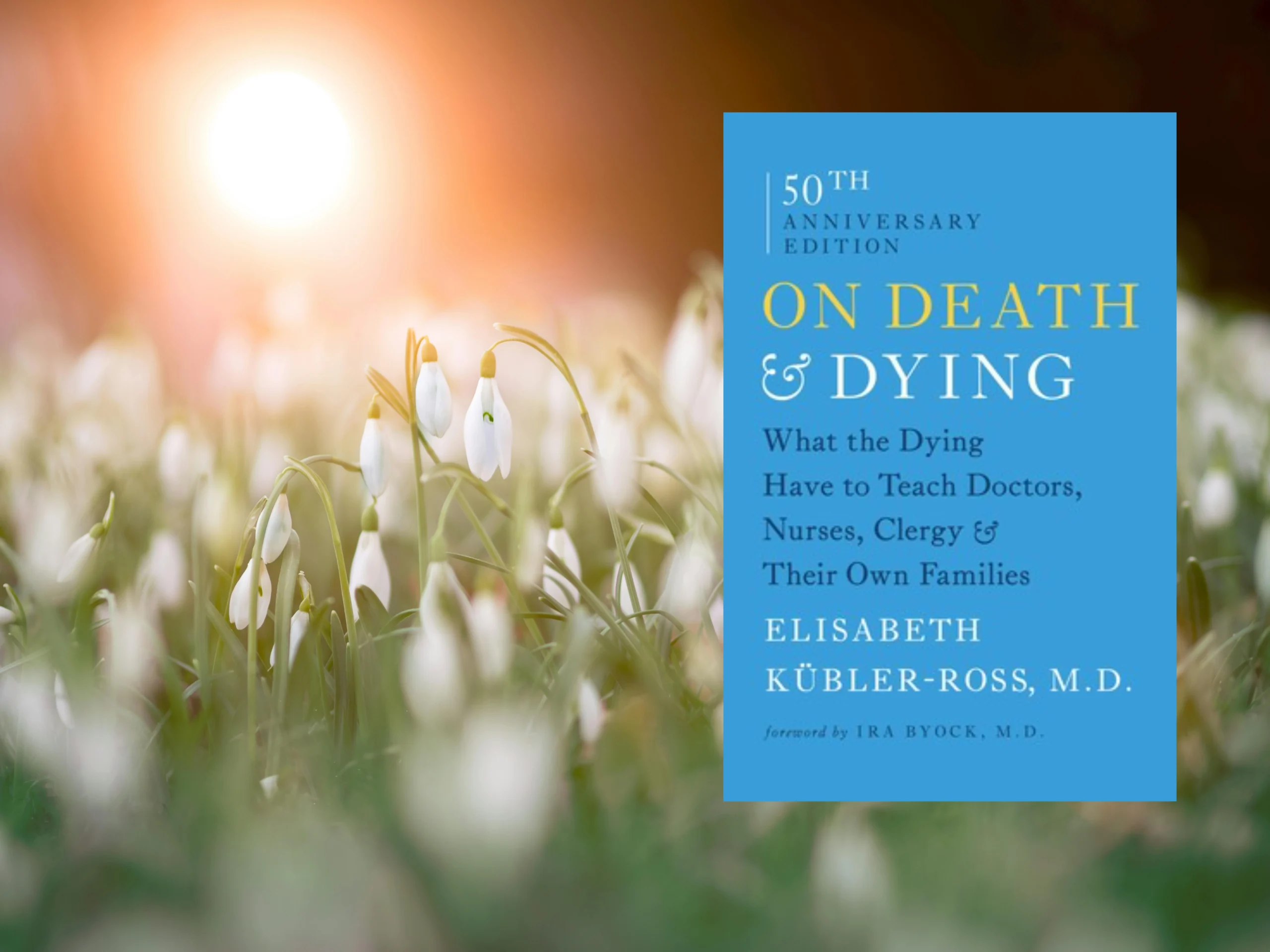
Elisabeth Kübler-Ross’s On Death and Dying confronts this reality with depth and compassion. The Swiss-American psychiatrist (1926–2004) explored why people fear death and what can be learned from those near the end of life. Published in 1969, the book was later named one of the century’s most influential works by the New York Public Library, and Time magazine recognized Kübler-Ross as one of the 20th century’s most important thinkers. The book has since served as a guide for terminally ill patients, their families and health care providers, helping ease fear and uncertainty. Kübler-Ross outlined the grieving process in five stages: denial, anger, bargaining, depression and acceptance. She emphasized that facing death, rather than denying it, can bring healing, and that acknowledging death as part of life is as vital as celebrating birth.
Death is often treated as a forbidden subject, feared or ignored. Yet Kübler-Ross opened a space where it could be spoken about with greater ease. She encouraged patients of all ages to become, in a sense, teachers. Their reflections on fear, hope and the final stages of life not only helped them find peace but also reminded those left behind of the value of each moment. Honest conversations, she suggested, reveal that life itself is a gift.
Medical advances mean that many illnesses once fatal can now be treated. Yet Kübler-Ross questioned whether modern, well-equipped hospital rooms are enough to meet the needs of patients. Her interviews showed that emotional and spiritual care are just as essential as medical treatment. Recognizing these needs reshapes how families and caregivers approach the dying.
She also explored how deeply people resist imagining the end of their own lives. While news of war or natural disasters brings sorrow, the thought that death will one day knock on our own doors can be unsettling. Kübler-Ross sought to ease this weight, helping readers approach death with understanding rather than fear, and offering ways to support patients so their final journey can be one of peace.
The author further highlighted the importance of speaking to children about death truthfully. She warned that the comforting lies told to shield them from sadness can later cause deeper harm. She argued that ignoring death, especially in a hospital setting, harms patients more than it protects them. Instead, listening carefully and sharing emotions provides dignity and comfort. Even a doctor’s words—“I have done everything within my knowledge to help you, and I will continue to try to make you as comfortable as possible”—can reassure patients that they are not abandoned.
Kübler-Ross once wrote that watching someone die peacefully is like seeing a shooting star: appearing briefly among millions, then disappearing forever. It is a reminder of the uniqueness of each human life.
As human beings, we may live less than a century, sometimes much less. If we can embrace life as a miracle and the people we encounter as gifts, we may live more meaningfully. And when the time comes, we can close our eyes with peace and courage.