

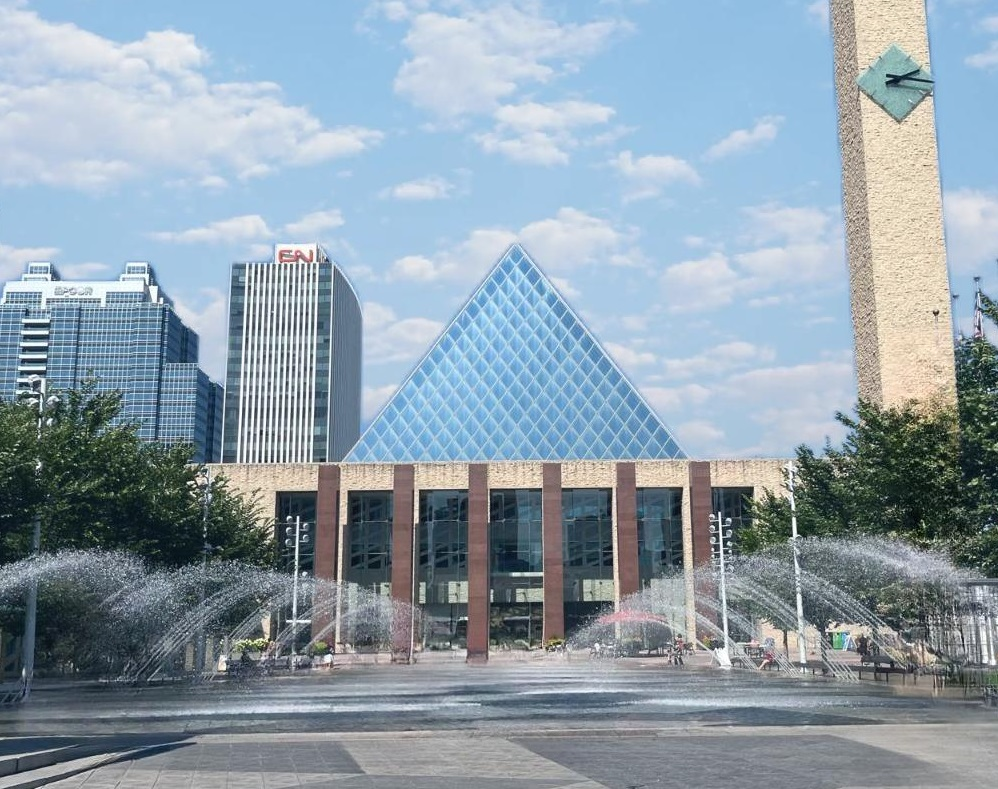
Edmonton is proposing another four years of property tax increases. Its troubled electric bus purchase and ongoing complaints about snow clearing raise questions about how effectively the city spends taxpayers’ money.
Edmonton is preparing to raise property taxes again, with a proposed four-year budget that would leave homeowners paying nearly 20% more by 2030.
The city administration is recommending increases of 4.9% in 2027, 4.7% in 2028, 4.5% in 2029 and 3.9% in 2030.
If approved without changes, the increases would add up to approximately 19.3% over four years.
For a home assessed at $500,000, the city estimates the monthly property tax bill would reach about $340 in 2027, roughly $18 more than this year.
The additional revenue would help pay for snow clearing, road maintenance, police and fire services, and repairs to aging infrastructure.
These are services Edmonton residents already pay taxes to receive.
The question is whether another round of increases will bring noticeable improvements, particularly after some of the city’s previous spending decisions failed to deliver the results expected.
Millions spent on electric buses, followed by a bankruptcy claim
Edmonton’s electric bus purchase remains one of the more troubling examples.
In 2020, Edmonton Transit Service introduced 60 battery-electric buses manufactured by California-based Proterra.
The city paid US$58.76 million under its contract with the company, according to documents Edmonton later filed in a U.S. bankruptcy court.
The buses were purchased to modernize public transit and reduce emissions. They were also expected to meet contractual requirements for reliability, battery performance and driving range.
But Edmonton’s own court filings described serious problems.
The city alleged that the buses repeatedly failed to meet their performance requirements, particularly during cold weather.
Under the contract, the buses were expected to travel approximately 268 kilometres in extreme cold. Edmonton reported average winter performance of about 165 kilometres, roughly 38% below that requirement.
Mechanical and structural problems added to the difficulties.
In an October 2023 court filing, the city reported that more than half the fleet had, at times, been unavailable because of non-routine maintenance.
Proterra filed for Chapter 11 bankruptcy protection in August 2023.
Edmonton subsequently sought approximately $82 million in damages, alleging breach of contract and negligence.
The $82 million was a legal claim, not a confirmed financial loss. The amount the city may ultimately recover remains unclear.
Proterra’s transit manufacturing business was sold during the bankruptcy process. Edmonton continues to list 60 electric buses in its fleet, although that figure does not establish how many are available for daily service.
The experience raises questions about how the purchase was evaluated and what safeguards were in place.
Edmonton spent tens of millions of dollars on vehicles intended to operate through Alberta winters. According to the city’s own allegations, those vehicles struggled to meet the cold-weather performance requirements written into the contract.
Electric buses are not necessarily the problem. The issue is whether Edmonton adequately assessed the technology before committing public money and what it has learned from the purchase.
Residents deserve to know what the fleet has ultimately cost, how many buses remain operational and whether the city has recovered any money through the bankruptcy proceedings.

Snow clearing: Two weeks to finish, and snow can remain
Snow removal is another service Edmontonians have questioned for years.
Edmonton’s winter maintenance standards prioritize major roads, with a target of clearing them to bare pavement within one day after snowfall ends.
Secondary arterial and collector roads have a five-day target.
Residential streets operate under different rules.
A clearing cycle is generally initiated when accumulated snowpack exceeds five centimetres. Once that cycle begins, crews can take up to 14 days to complete the work.
Even then, the roads do not have to be cleared to bare pavement.
The city’s standards allow approximately five centimetres of compacted snow to remain.
That means a residential street can still be covered in snow after crews have completed the work required under Edmonton’s own policy.
The city says its approach reflects the cost of snow removal, available equipment, road safety and the difficulty of storing large amounts of removed snow.
Those are reasonable considerations in a city with an extensive road network.
But Edmonton is also a northern Canadian city where heavy snowfall and prolonged freezing temperatures are hardly unusual.
Residents who spend days navigating icy ruts or waiting for residential streets to be cleared may reasonably question whether the existing standards are good enough.
And when crews finish blading a street but leave compacted snow behind, warmer weather eventually takes care of what remains.
Sunshine, it turns out, is one of Edmonton’s more economical snow-removal options.
Unfortunately, it is not particularly dependable in January.
The proposed budget includes more frequent residential blading and faster removal of windrows, the ridges of snow left behind by plows.
Those improvements would be welcome if residents actually see them.
But spending more money on snow clearing is not the same as clearing streets more effectively.
Council should be asking how much faster the service will become, what performance targets will be used and how the city will report the results.


A $6.3-billion capital plan
The proposed four-year budget includes approximately $6.3 billion in capital spending.
About $3 billion is associated with previously approved projects, including LRT extensions, Yellowhead Trail improvements, Terwillegar Drive and the Lewis Farms recreation centre.
Another $3.3 billion in capital funding is being recommended, including approximately $2.3 billion for renewing existing infrastructure.
The operating budget starts at roughly $4 billion and covers municipal services, staffing, transit, emergency operations and maintenance.
Edmonton has legitimate financial pressures.
Roads and bridges need repairs. Transit vehicles must eventually be replaced. New neighbourhoods require infrastructure, and a growing population increases demand for municipal services.
City officials have also warned about the gap between available funding and the amount needed to maintain infrastructure at an ideal level.
But the size of those pressures does not answer every question about spending.
Edmonton’s preliminary financial results for 2025 showed an operating surplus of approximately $31 million.
That surplus does not mean the city can avoid future tax increases. Municipal budgets involve restricted funding, long-term obligations and expenses that vary from year to year.
It does, however, belong in the broader discussion about the city’s finances.
Residents should be able to question spending priorities without being accused of opposing road maintenance, public transit or emergency services.
Supporting essential services and demanding better financial oversight are not opposing positions.
Mayor describes $20 a month as moderate
Mayor Andrew Knack has said he wants to reduce the pace of property tax increases after the larger hikes Edmonton experienced between 2023 and 2026.
Speaking to reporters Tuesday, Knack described an additional $20 a month as moderate if residents receive meaningful service improvements.
The administration’s proposal includes more resources for snow clearing and policing, along with plans for five new fire halls.
Knack has also identified public safety, economic development, growth management and service quality as priorities.
Not everyone agrees with the proposed approach.
Ward tastawiyiniwak Coun. Karen Principe has called for greater attention to essential services, spending efficiency and reducing the amount of additional revenue the city needs.
The Edmonton Chamber of Commerce has welcomed the focus on infrastructure maintenance and core services while urging council to address affordability and spending priorities.
For homeowners already dealing with higher grocery, utility, insurance and housing costs, another $18 or $20 a month may not feel particularly moderate.
And that is only the first year of the proposed increases.
Property taxes would continue rising in 2028, 2029 and 2030 under the administration’s plan.
The compounded effect matters more than the monthly increase presented for a single year.
What are residents getting for their money?
Edmonton’s electric bus purchase and residential snow-clearing standards are different issues, but both raise questions about public spending.
The buses were supposed to meet contractual performance requirements. The city later alleged they did not and pursued damages after the manufacturer entered bankruptcy protection.
Residential snow clearing, meanwhile, can take up to 14 days once a clearing cycle begins, and the city can still meet its standards while leaving compacted snow on the road.
Neither example proves every municipal department is poorly managed or that every proposed tax increase is unnecessary.
But they do give residents reason to expect more detailed answers before council approves another four years of higher taxes.
How many of Edmonton’s electric buses are available for service today? How much has the city spent maintaining them? Has any money been recovered from Proterra?
And if the snow-clearing budget increases, what exactly will change for residents?
Will neighbourhood streets be cleared sooner? Will windrows disappear faster? Will the city publish results showing whether the additional spending made a difference?
Those are questions council can ask before approving the budget, rather than waiting until residents complain again.
Council still has time to make changes
Edmonton’s proposed budget has not yet been approved.
A public hearing is scheduled for Nov. 23, with council deliberations beginning afterward. The city expects to finalize the budget by Dec. 18.
Councillors can still amend spending plans and adjust the proposed tax increases.
Edmonton needs reliable roads, transit, emergency services and infrastructure. Maintaining those services costs money, particularly as the city grows.
But residents also have a right to expect careful purchasing decisions, clear financial reporting and services that work.
The administration has presented its case for collecting more revenue. Council now has to decide whether that case is strong enough and whether the proposed spending will produce the promised improvements.
Edmonton City Hall has become quite practiced at proposing higher property taxes.
Residents are entitled to expect the same consistency when it comes to delivering results.